Pages

October 3, 2017

5 Best Free VPN Services in 2017

What is a Free VPN?

A Free VPN (Virtual Private Network) is a cost-effective online service that provides digital privacy, security, and the ability to unblock and download website content from all over the world at no cost at all.
Running a complementary VPN service isn’t easy. That’s why the best providers charge subscribers for their services. However, we feel strongly that everybody should be able to access a VPN for free when they need one. That is why we have hunted far and wide for the five best free VPNs of 2017. In addition, to make your life easier, this article will explain everything you need to know about free services.
VPN services have quickly risen to fame in the last few years. VPN software gives people the ability to protect themselves and their data from online surveillance by Internet Service Providers (ISPs), governments, advertisers, and even hackers.
VPNs also allow people to unblock website content by allowing them to pretend to be in a different country. This makes them perfect for people who are going on holiday and want to access services from back home. They are also ideal for people who want to access foreign TV streams (or sports competitions). Furthermore, VPNs are excellent for people living under strong government censorship.

In 2017, what’s the best COSTLESS VPN service the online world has to offer?

The providers in this article are the best complementary VPN services of 2017. However, for a full blisteringly fast and fully featured service (perfect for those that want to download a lot of data), please look at these premium VPNs. Remember, unlike most free options, the VPNs in this guide are reliable, secure, and highly efficient. They have all been thoroughly tested by our experts.
BestVPN Editor's Choice Award
TunnelBear Homepage
PROS:
  • Simple setup, incredibly easy to use
  • Excellent encryption
  • Can connect up to 5 devices
  • 500MB of free data every month
CONS:
  • No peer-to-peer (P2P)
  • Few advanced settings
  • Usage capped
Our review found TunnelBear to be a fantastic free VPN that many people like because of its amusing style. However, this VPN is more than just fun.

This VPN doesn’t keep any logs, which makes it great for security. In addition, the company’s privacy policy is outstanding, making this a reliable free VPN to use for online privacy and security. Another positive aspect of this free VPN is that it gives users access to all of the VPN servers on the network. In addition, those servers are excellently placed. Unfortunately, you can’t use the free option for any more than 500MB worth of web browsing per month. When the data limit kicks in, however, you can earn more data by doing some social sharing!
Try the Best VPN Service Today!
Visit TunnelBear »30 day moneyback guarantee

#2 Free VPN in 2017: hide.Me

hide.Me Homepage
PROS:
  • Strong encryption
  • Servers in 22 countries
  • Zero logs
  • Superb privacy policy
  • Highly experienced customer care
CONS:
  • Limited to 2GB per month
hide.me is a VPN provider from Malaysia that offers a free VPN plan. Subscribers can select from 28 servers in 22 countries. Connection speeds are solid and security is taken care of thanks to OpenVPN encryption. Get a whopping 2GB per month – quite a lot of data, and certainly enough to get you some privacy when you really need it (and to unblock websites that are unavailable). It is also compatible with all devices.

As with all the free VPNs on our list, this VPN has limitations. If you use the internet a lot, then you should probably choose a non-data capped VPN. With that said, we really like hide.me – it is one of the best all-around free VPNs available in 2017.

#3 Free VPN in 2017: SurfEasy

SurfEasy Homepage
PROS:
  • Easy setup
  • P2P allowed
  • Owned by Opera
  • Easy to use apps
  • Servers across the globe
CONS:
  • Minor logging
  • 2GB limit on Starter Plan
SurfEasy is a Canadian free VPN provider that is very similar to TunnelBear.

The SurfEasy apps are easy to use, provide you with strong security and solid protection, and are pretty fast. The free version provides you with 500MB of data transfer, and you can increase your data by recommending the service to friends and family. Servers are reliable and the VPN is trusted. However, their paid plan is quite a lot better, and pricing starts at just $6.49/month.

#4 Free VPN in 2017: CyberGhost

CyberGhost Homepage
PROS:
  • No bandwidth limits
  • Solid speeds
  • Free iOs and Android apps
  • Automatic internet kill switch
  • Transparent privacy policy
CONS:
  • Limited locations
  • Advertisements
Subscribing to CyberGhost free VPN is a superb way to introduce yourself to the world of VPNs. There is no bandwidth limit, encryption is similar to that on a premium VPN, and setting up the service is easy. CyberGhost’s user-friendly desktop app makes connecting to the VPN nice and simple - with plenty of servers.

While CyberGhost Free is superb, there are some drawbacks to consider. CyberGhost Free users have in-app advertisements, queues to connect (during peak hours), and limited server locations.

Check out CyberGhost Free for yourself using the link below!

#5 Free VPN in 2017: Windscribe

Windscribe Homepage
PROS:
  • Strong encryption
  • Great privacy policy
  • Easy to use
  • Perfect for beginners
  • High transparency
CONS:
  • Limited support options
  • Usage capped
Windscribe is a free VPN that packs a real punch. The free plan allows people to use 10 GB per month, which is a really decent allowance. Security is excellent, because not only does Windscribe provide strong encryption but it has a really admirable privacy policy that protects its users.

The free windscribe plan can only be used on one device, and free users of the service don’t get access to all the servers. However, as this VPN is available for free, this is not a surprise and the servers that users do get access to are located in useful places. Furthermore, Windscribe provides great speeds – which is a real bonus. All in all a superb free VPN that is well worth a try.

What Can a VPN Do?

A free Virtual Private Network (VPN) is an online service that allows people to pretend to be in a different country. In addition, VPN subscribers get digital privacy and online security. Trusted VPNs protect subscriber data both at home and on public WiFi (to protect from hackers) by providing strong encryption.
Once connected to a VPN, subscribers can securely pretend to be overseas to access and download any content.  In addition, a VPN bypasses government blocks placed by landlords, workplaces, and other network administrators.

Is It Safe to Use a VPN that is free?

If you find the right free VPN, then yes, it is safe to use. Sadly, however, there are many free services around that we simply can’t recommend. With VPNs, you really do get what you pay for. Many free services make money by selling user data to third parties. This is a highly insecure practice. After all, a VPN is meant to keep your browsing habits private – not sell the data to the highest bidder.
Many free VPNs have poor privacy policies, outdated encryption, and generally, provide unreliable connections. The good news, however, is that this is not always the case.
Some free services are secure and only place bandwidth and usage limits in order to provide the service for free. In this article, we have included the five best free VPNs of this kind.
These changeless services have been selected because they are safe to use. However, you should remember that they are all restrictive compared to a premium VPN service. Paid services have more and better choices of servers, and provide faster connection speeds for streaming, as well as stronger security.

Finding a VPN that you can trust

There are many hundreds of VPNs on the market. This can make choosing a provider quite daunting. Furthermore, trustworthy and reliable free services are incredibly hard to find.
In this article, we will explain everything you need to know about getting a free service, what a free VPN is, and how it differs from a paid VPN. We will also describe what a free VPN can be used for.
What makes one VPN free and another one a paid service? Why is it important to avoid some free VPNs? By the end of this article, you will have all the knowledge you need about free VPNs.

Can I Get a Free, Unlimited VPN?

The honest answer to this is tricky. There are free VPNs out there that do allow you to use them without usage limits. Unfortunately, those services make revenue by collecting data about their consumers to sell to third parties. We consider this to be the exact opposite of what a VPN should do. Thus it’s impossible for us to recommend these risky VPN services.
Beyond that, it is true that you will find some free VPNs on this list that don’t have a usage limit and instead throttle the bandwidth (speed) of the VPN. This means you can use it all month. However, the speed throttling will make it very hard to enjoy streaming in HD, for instance.

How Do You Use a VPN?

A VPN works by encrypting all data coming and going from a subscriber’s device. Encrypted data is securely scrambled so that nobody can access it. The outcome is that anyone snooping on your data – be it your ISP, the government, or a hacker on public WiFi – can’t see the web browsing data. This protects vital information such as logins, credentials, passwords, and credit card details.
Furthermore, when connected to a VPN the websites that you visit believe that you are in the location of the VPN servers instead of where you really are. This allows users to access the internet as if they were in a foreign country, which is perfect for people living in a country with lots of censorship.

How to Download & Set Up a VPN that Costs Nothing

Setting up a free VPN is incredibly easy. Just follow this simple walkthrough:
  1. Choose a VPN service and click the link to its website.
  2. Subscribe and get the free VPN download that you require.
  3. Follow the installation instructions to get the free VPN software onto your device.
  4. Run the app and select the encryption option you prefer. We recommend OpenVPN as it is the strongest, but anything other than Point-to-Point Tunneling Protocol (PPTP) will be fine.
  5. Choose a VPN server where you would like to pretend to be and click “Connect.”
  6. Once the VPN connection has been established, the software will tell you. From that point on, you can access geo-restricted content securely.

Can I Use a Costless VPN with My Mobile Phone?

If you want to use a free VPN on your phone, any of the services in this guide will work fine. It is worth bearing in mind, however, that Android is usually covered more than iOS by VPN providers. However, at least some of the services in this guide do provide free VPN for iPhone software.
In fact, no matter whether you are looking for a free VPN for Windows, or Mac, there is an option on this list that has you covered! No matter which platform you run, you will be able to access free VPN servers with our recommendations.

What Makes One VPN Free and Another One Paid?

The free VPNs in this guide provide the service as a loss leader in order to entice people into purchasing a premium subscription. That’s why the free services are restricted.
Using a VPN for free can leave some people feeling cold. The experience can be slow and highly limited. Most of the time you will likely get cut off when you are streaming with a free VPN because you reach your usage limit.
With a paid VPN, subscribers get unlimited use of the servers and no bandwidth limits. This means that the VPN is fast and can be used to do even the most data-intensive tasks.
Other free VPNs may be less restrictive in terms of use, but the payoff comes in the form of worse encryption and a insecure privacy policy. Because a VPN is supposed to protect user data, we consider these types of services to be too risky to recommend.

Which Is the Best Free Service?

Generally speaking, the best free VPN service is one that doesn’t put user data at risk in order to provide the service for nothing. That’s why the best free services tend to restrict the service a little. VPNs are costly to run and thus at their very best they do cost a subscription fee.
Remember, many free VPNs are there to collect their subscribers’ web browsing histories in order to sell them to third parties (which is highly insecure). For this reason, if you need free VPN access we urge you to stick to a trusted VPN from this guide.

Free VPNs: Considerations

When you are choosing a free VPN, there are a few key considerations that you need to keep in mind:
a) What do plan to use your free VPN for?
b) How much use do you intend to get out of your free VPN?
Free VPN Considerations
The most important consideration is connection speeds. Slower connection speeds make it very hard to enjoy streaming with your free service. A free VPN that isn’t speed-capped usually has usage limits, so you may not get much opportunity to stream shows with a faster free VPN.
At the end of the day, if you plan to use a VPN all the time to watch geo-restricted streams in HD, or play gaming servers that are geo-restricted, you will likely need to opt for a paid service with a money-back guarantee. That way you can get a feel for a premium service without actually having to spend any money.

A VPN Free Trial?

Some VPNs offer a free trial. These services give you the opportunity to trial a full-blown premium service for anything between three days and a week.
Another option is to pay for a 30-day trial of a VPN and simply ask for your money back if you don’t like it. ExpressVPN has a 30-day money-back guarantee that it always honors – it is also the best VPN service in the world.
As such, using the free VPNs in this guide is only one option for getting the use of a free VPN. If you decide that you like using a VPN, it is definitely well worth using the free trials and money-back guarantees that the best VPNs provide.

A Free service for Netflix or Kodi

Netflix actively blocks VPNs and it is almost impossible to get a free service for Netflix. However, both Kodi users and Netflix subscribers can unblock streaming content for free using one of many VPNs’ free trials or money-back guarantees. This will allow you to stream as much content as you like for free for around 30 days – and then get your money back. We understand better than anyone just how many people want to find a VPN for Kodi that is free, and for those Kodi users, these VPNs are just the ticket. As for Netflix, a full premium package is going to be the only real way to get the job done, so a 30-day money back guarantee may be the best option for those who want to try a VPN for nothing.

A Free Service for iOS 11 or Android

For people looking for a costless VPN for iOS, the VPNs in this guide are all a great option and will work perfectly on any iOS device. The same goes for Android users: these services are ideal for use on all mobile devices.

A Warning About Free Services

The vast majority of free services are a privacy and security nightmare. Free VPNs often handle data insecurely, provide outdated OpenVPN encryption that can be hacked, and sell user data to the highest bidder. Thus we urge you to think twice before using untrusted free services – the risks truly are massive!
Virtual Private Networks are amazing and even the very best are not too expensive. For that reason, we strongly advise in favor of a fully featured VPN service that will protect users properly. There are plenty of superb cheap services around, and the level of freedom and security you get with a premium service is incomparable to what users get for free.

Free VPNs for Torrenting

When it comes to torrenting you will need a VPN that provides plenty of data usage and good speeds. The services in this guide will certainly get you on your way and will allow you to torrent securely for free. However, it is worth bearing in mind that for those people that want to do a lot of downloading using P2P, a paid service is probably going to be needed in the long run.

Free Virtual Private Network Services: Conclusion

Over the last few years, there has been a massive explosion in awareness about Virtual Private Networks. Due to this increase in knowledge people are looking for recommendations about which service to get in order to protect themselves.
There are well over 850 commercial VPNs on the market and that number is growing all the time. Many of those VPN services lie about the level of service that they provide. They are only there to make a quick buck from unsuspecting consumers.
This article is designed to help people who want to try out a VPN for free to have the opportunity to do so safely. The free VPN services in this article are by far the best options available. They do not skimp on security or sell their users’ data.
In the end, a free VPN will only get you so far. For people who become interested, we strongly recommend upgrading to a paid service such as ExpressVPN or NordVPN. There are plenty of cheap options, and even the most expensive VPNs on the market really don’t cost much per year. The difference in the level of service that you get with a paid service, however, is vast.
Finally, we would like to remind you that you are far better off using one or a combination of the free VPNs in this article than you are using one of the many untrusted free services on the market that we have purposefully left off this list. Our recommendations are the best free VPNs on the market, so please stick to these if you value your privacy and security.

Best Free VPN Providers Recap

Ray Walsh
I am a freelance journalist and blogger from England. I am highly interested in politics and in particular the subject of IR. I am an advocate for freedom of speech, equality, and personal privacy. On a more personal level I like to stay active, love snowboarding, swimming and cycling, enjoy seafood, and love to listen to trap music.

September 13, 2017

How HTTPS Website Security Is Making the Internet Safer From Snoopers


Image: Gizmodo
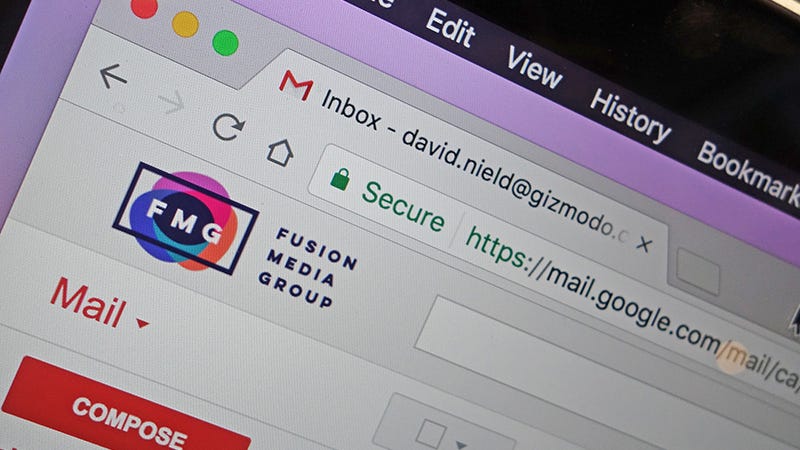
You may have noticed in your travels around the internet that your browser’s address bar occasionally turns green and displays a padlock—that’s HTTPS, or a secure version of the Hypertext Transfer Protocol, swinging into action. This little green padlock is becoming vitally important as more and more of your online security is eroded. Just because your ISP can now see what sites you browse on doesn’t mean they have to know all the content your consuming. Below is the rundown on HTTPS, so you can better understand this first, and easiest line of defense against potential snoopers and hackers.
HTTP or the Hypertext Transfer Protocol is the universally-agreed-upon coding structure that the web is built on. Hypertext is the basic idea of having plain text with embedded links you can click on; the Transfer Protocol is a standard way of communicating it.
When you see HTTP in your browser you know you’re connecting to a standard, run-of-the-mill website, as opposed to a different kind of connection, like FTP (File Transfer Protocol), which is often used by file storage databases. The protocol before a web address tells your browser what to expect and how to display the information it finds. So what about the extra S in HTTPS?
The S is simple. It means Secure.
It originally stood for Secure Sockets Layer (SSL) which is now part of a broader security protocol called Transport Layer Security (TLS). TLS is part of the two layers that make up HTTPS, the other being traditional HTTP. TLS works to verify that the website you’ve loaded up is actually the website you wanted to load up—that the Facebook page you see before you really is Facebook and not a site pretending to be Facebook.


Image: Screenshot
On top of that, TLS encrypt all of the data you’re transmitting (like apps such as Signal or WhatsApp do). Anyone who happens across the traffic coming to or from your computer when it’s connected to an HTTPS site can’t make sense of it—they can’t read it or alter its contents.
So if someone wants to catch the username and password you just sent to Google, or wants to throw up a webpage that looks like Instagram but isn’t, or wants to jump in on your email conversations and change what’s being said, HTTPS helps to stop them.
It’s obvious why login details, credit card information, and the like is better encrypted rather than sent in plain text—it makes it much harder to steal. In 2017, if you come across a shopping or banking site, or any webpage that asks you to log in, it should have HTTPS enabled; if not, take your business elsewhere.


Look for the padlock. (Image: Screenshot)
As an added bonus, HTTPS stops ISPs and governments from snooping on your browsing activity too—they can still see that you’re visiting Amazon and Facebook or whatever, but they can’t tell what you’re searching for on those sites or which individual pages you’re opening up.
Browsers will now very clearly show you when you’re connected to HTTPS, putting the first part of the web address you’re visiting in green and displaying a padlock symbol. You can often click on this icon to see more details about the secure connection.
Many mobile apps use the same protocols to make secure, encrypted connections, but unfortunately users don’t yet have a simple way of checking up on this. Apps from the major players—like Facebook, Google, and your bank—can generally be trusted, but for apps from smaller developers you usually have to assume the right security is in place or confine your browsing to the browser.


Image: Screenshot
Check the details of the app listing and contact the developer directly if you’re worried about whether your connection to the web really is secure inside a mobile app.
So if HTTPS is so great, why not use it for everything? That’s definitely a plan. There is now a big push to get HTTPS used as standard, but because it previously required extra processing power and bandwidth, it hasn’t always made sense for pages where you’re not entering or accessing any sensitive information. The latest HTTPS iterations remove most of these drawbacks, so we should see it deployed more widely in the future—although converting old, large sites can take a lot of time.
If you want to stay as secure as possible, the HTTPS Everywhere extension for Chrome and Firefox makes sure you’re always connected to the HTTPS version of a site, where one has been made available, and fixes a few security bugs in the HTTPS approach at the same time. It’s well worth installing and using, particularly on public Wi-Fi, where unwelcome eavesdroppers are more likely to be trying to listen in.
HTTPS isn’t 100 percent unbeatable—no security measure is—but it makes it much more difficult for hackers to spy on and manipulate sensitive data as it travels between your computer and the web at large, as well as adding an extra check to verify the identity of the sites you visit. It’s a vital part of staying safe on the web.


Source: http://fieldguide.gizmodo.com/how-https-website-security-is-make-the-internet-safer-f-1794166995

August 24, 2017

5 Intelligent Sites to Boost Your Brain

Even though the internet is largely populated by cat videos and memes, it also has some intelligent stuff. But you need to know where to find it, if you want the web to boost your brain and not blast it.
A while back, we compiled a mega-list of 35 brainy sites for you to read more intelligent content. This new list has only five more, but we find ourselves going back to them a lot. Don’t miss out on these. Read More Intelligent Content in 2016 with These 35 Sites Read More Intelligent Content in 2016 with These 35 Sites We should all read these 35 sites more often. If you are tiring of dumbed-down content make things somewhat more thoughtful this coming year with this super list. Read More

1. Wait But Why (Web): Intelligent Yet Funny

This has fast become one of my favorite sites on the internet. Tim Urban writes about things both profound and trivial at Wait But Why. But no matter the subject, he dives deep into it and understands it from all angles, before offering an informative but humorous take.


wait but why


For example, take his post on putting time in perspective. He charts recognizable time periods through colored bars to create a wonderful way of putting time in perspective. And then there are the slightly more personal but insightful reads, like the one on “clueyness.”
Wait But Why isn’t updated regularly, but its archives have plenty of reading material on all sorts of subjects. Dive in, you’ll have a great time. It’s one of the funniest reads on the web. 15 Funniest Websites for the Best Humor on the Web 15 Funniest Websites for the Best Humor on the Web The web is a huge collection of humor. You will find a reason to laugh with these 15 top websites that tickle your funnybone. Read More

2. LessWrong (Web): Intensely Smart

LessWrong might just be the smartest portal on the internet. It’s a community of individuals whose entire aim is to improve their reasoning ability.


less wrong


Start with a series of blog posts that explain the community’s attitude towards rationality and discussing it. You can even download it as an ebook. The essays are an excellent, thought-provoking read.
LessWrong isn’t based around discussing what’s happening in the world right now. It’s a more rounded understanding and discussion of logic and decision-making.

3. Information Is Beautiful (Web): When Graphs Are Better Than Words

Who says you can only learn things by reading? Information Is Beautiful is a data-driven site that puts important numbers and figures into gorgeous infographics.


information is beautiful


It’s a new way of looking at information, and more often than not it will register in your memory. It can be a map of what every country is the best at or a summary of all the medical conditions you’re at risk of. Admit it, if you read this as lines upon lines of text, you might get bored or not read it at all.
Use the menu bar at the top left of the site to check out recent, popular, and interactive infographics. Some of them are as gorgeous as the interactive mini-sites made by the BBC. 5 Stunning Interactive Mini-Sites Made by the BBC 5 Stunning Interactive Mini-Sites Made by the BBC The BBC showcases a stunning series of digital experiments. From knowing your body better to interactive chemistry experiments, you'll see it all here. Read More

4. Real Life Lore (YouTube): Animated Informational Videos

If you’ve wondered about some phenomenon, chances are, Real Life Lore has dove into it. The YouTube channel is a bit like XKCD’s What If, in that it gives in-depth answers to weird questions. But it’s not all hypothetical here.


Real Life Lore explores both fantasy scenarios as well as reality. Through short videos, it gives you a detailed explanation of things to broaden your mind. For example, about how the ocean is deeper than you think, or how the world map looks different than what you’re used to.
Like more famous YouTube counterparts Minute Physics or ASAP Science, you can spend hours at Real Life Lore. It’s one of those educational YouTube channels made for marathon viewing. 10 Educational YouTube Channels Made for Marathoning 10 Educational YouTube Channels Made for Marathoning YouTube is now the go-to place for nearly any video you could want -- and that makes it a wonderful educational resource. Especially if you binge-watch the best YouTube channels out there. Read More

5. TED Ideas (Web): The Official Blog of TED

There are some excellent alternatives to TED talks to grow your intelligence, but hey, TED is still awesome. And one of its unheralded stars is the TED Ideas blog.


ted ideas
At Ideas, you’ll find essays and articles on diverse topics which still fall under the broad categories of Technology, Entertainment, and Design (TED). Like with most talks, the purpose of these posts is to expand your mind and challenge your preconceived notions. Think bigger!
The Ideas blog is updated multiple times a week, so you will find something new to read easily. You should especially check out the “We Humans” category for some incredible reads about the world around us.

What’s Your Daily Brain Boost?

These sites are excellent fodder for when you want to grow your mind, but you might not follow them daily. Personally, I love learning new things through Reddit’s /r/TodayILearned posts. Where do you get your daily brain boost?
Image Credit: Image Flow via Shutterstock

Source: http://www.makeuseof.com/tag/intelligent-sites-boost-brain/

How Do I Download an Entire Website for Offline Reading?

Even though WiFi is everywhere these days, you will find yourself without it from time to time. And when you do, there may be certain websites you wish you could access while offline — perhaps for research, entertainment, or posterity.
For example, if you’re to embark on a 12-hour international flight, downloading an entire website can be a great alternative to ebooks, audiobooks, podcasts, and movies. Examples of good and interesting infodump websites include Michael Bluejay’s guides and Wait But Why. 5 Intelligent Sites to Boost Your Brain 5 Intelligent Sites to Boost Your Brain Want to grow your mind? The web has some intelligent stuff. But you need to know where to find it, if you want the web to boost your brain and not blast it. Read More
But how do you go about downloading an entire website? It’s easier than you think! Here are four tools you can use to do the job for you, nearly zero effort required.

1. WebCopy (Windows)

WebCopy by Cyotek takes a website URL and scans it for links, pages, and media. As it finds pages, it recursively looks for more links, pages, and media until the whole website is discovered. Then you can use the configuration options to decide which parts to download offline.


The interesting thing about WebCopy is you can set up multiple “projects” that each have their own settings and configurations. This makes it easy to re-download many different sites whenever you want, each one in the same exact way every time. One project can copy many websites, so use them with an organized plan (e.g. a “Tech” project for copying tech sites).
To download a website with WebCopy:
  1. Install and launch the app.
  2. Navigate to File > New to create a new project.
  3. Type the URL into the Website field.
  4. Change the Save folder field to where you want the site saved.
  5. Play around with Project > Rules… (learn more about WebCopy Rules).
  6. Navigate to File > Save As… to save the project.
  7. Click Copy Website in the toolbar to start the process.
Once the copying is done, you can use the Results tab to see the status of each individual page and/or media file. The Errors tab shows any problems that may have occurred and the Skipped tab shows files that weren’t downloaded. But most important is the Sitemap, which shows the full directory structure of the website as discovered by WebCopy.
To view the website offline, open File Explorer and navigate to the save folder you designated. Open the index.html (or sometimes index.htm) in your browser of choice to start browsing.

2. HTTrack (Windows, Linux, Android)

HTTrack is more known than WebCopy, and is arguably better because it’s open source and available on platforms other than Windows, but the interface is a bit clunky and leaves much to be desired. However, it works well so don’t let that turn you away.


Like WebCopy, it uses a project-based approach that lets you copy multiple websites and keep them all organized. You can pause and resume downloads, and you can update copied websites by re-downloading old and new files.
To download a website with HTTrack:
  1. Install and launch the app.
  2. Click Next to begin creating a new project.
  3. Give the project a name, category, base path, then click Next.
  4. Select Download web site(s) for Action, then type each website’s URL in the Web Addresses box, one URL per line. You can also store URLs in a TXT file and import it, which is convenient when you want to re-download the same sites later. Click Next.
  5. Adjust parameters if you want, then click Finish.
Once everything is downloaded, you can browse the site like normal by going to where the files were downloaded and opening the index.html or index.htm in a browser.

3. SiteSucker (Mac, iOS)

If you’re on a Mac, your best option is SiteSucker. This simple tool rips entire websites and maintains the same overall structure, and includes all relevant media files too (e.g. images, PDFs, style sheets). It has a clean and easy-to-use interface that could not be easier to use: you literally paste in the website URL and press Enter.


One nifty feature is the ability to save the download to a file, then use that file to download the same exact files and structure again in the future (or on another machine). This feature is also what allows SiteSucker to pause and resume downloads.
SiteSucker costs $5 and does not come with a free version or a free trial, which may be its biggest downside. The latest version requires macOS 10.11 El Capitan or later. Older versions of SiteSucker are available for older Mac systems, but some features may be missing.

4. Wget (Windows, Mac, Linux)

Wget is a command-line utility that can retrieve all kinds of files over the HTTP and FTP protocols. Since websites are served through HTTP and most web media files are accessible through HTTP or FTP, this makes Wget an excellent tool for ripping websites.
While Wget is typically used to download single files, it can be used to recursively download all pages and files that are found through an initial page:
wget -r -p //www.makeuseof.com
However, some sites may detect and prevent what you’re trying to do because ripping a website can cost them a lot of bandwidth. To get around this, you can disguise yourself as a web browser with a user agent string:
wget -r -p -U Mozilla //www.makeuseof.com
If you want to be polite, you should also limit your download speed (so you don’t hog the web server’s bandwidth) and pause between each download (so you don’t overwhelm the web server with too many requests):
wget -r -p -U Mozilla --wait=10 --limit-rate=35K //www.makeuseof.com
Wget comes bundled with most Unix-based systems. On Mac, you can install Wget using a single Homebrew command: brew install wget (how to set up Homebrew on Mac). On Windows, you’ll need to use this ported version instead. Install Mac Software From Terminal With Homebrew Install Mac Software From Terminal With Homebrew Install (almost) any free Mac app by typing four words and hitting "Enter". Read More

Which Websites Do You Want to Download?

The bigger the site, the bigger the download. We don’t recommend downloading huge sites like MakeUseOf because you’ll need thousands of MBs to store all of the media files we use. The same is true for any other site that’s frequently updated and heavy on media.
The best sites to download are those with lots of text and not many images, and sites that don’t regularly add new pages or changed. Static information sites, online ebook sites, and sites you want to archive in case they go down are ideal. The Best Websites on the Internet The Best Websites on the Internet An enormous list of the best websites on the Internet, in fourteen handy categories. These are considered to be the top-of-the-line sites that will get you what you need. Read More
Which sites are you trying to download? Are there any other tools for copying websites that we missed? Share them with us down in the comments below!
Originally written by Justin Pot on April 20, 2013
Image Credit: RawPixel.com via Shutterstock


Source: http://www.makeuseof.com/tag/how-do-i-download-an-entire-website-for-offline-reading/

August 9, 2017

Seven Sites With Free Photos You Can Use However You Want

Great photos can really make a website pop. They catch the eye, yes, but can also help you get your point across.

If you’re building a site, you could learn how to take good photos, but sometimes that’s not an option. Happily, there are all sorts of sites out there full of free images you can use for any purpose: commercial or otherwise.
Photos on these sites are usually contributed by volunteer photographers looking to get their name out there, or simply looking to contribute something useful to the world. Using these sites help make building beautiful websites a lot easier, so here’s a few we think are worth checking out.

Unsplash: Beautiful Photos Organized Well


Unsplash offers over 200,000 beautiful photos that you can use for whatever you want. The search functionality works quite well in our experience, and you also can browse by category. The images themselves range from landscapes to portraits of people and animals. There’s not a lot of filler on this site: most of the photos are really high quality.
Unsplash’s license is quite permissive, allowing you to use the photos for any purpose you want other than creating a competing stock photo service. You don’t even need to attribute the photographers, though doing so is always appreciated.
Create an account to upload your own photos, or curate your own collection of photos already on the site. You can even follow photographers you like on the service.

Kaboom Pics: Browse by Color Palette


At first glance, Kaboom Pics seems pretty similar to other sites, offering a wide range of searchable images that you can browse by category. But they provide one standout feature: a focus on color. If you want photos that fit your project’s palette, Kaboom lets you browse by color. And this focus on color goes both ways: every photo offers a color palette, allowing you to match your design to the photo if you like.
Kaboom also lets you see the entirety of a particular photo shoot, so if an image you find isn’t quite perfect, you might find a similar one from another angle.
Images are free to use for personal or commercial usage, including blogs and social media. Redistributing or selling photos isn’t allowed without permission.

Morguefile: Free to Use Forever and Ever


With over 350,000 completely free to use photos, Morguefile is another solid option. Just be aware: you’ll sometimes see links to iStock and other paid image sites when your searches don’t yeild results.
Still, Morguefile has lots of images that are free for commercial usage and remixing, though you cannot sell or redistribute the images exactly as they are without alteration. So, don’t use this site to build your own photo repository.

Pixabay: One Million Photos and Counting, Plus Videos


Pixabay offers over one million images—all free to use on your website—and, unlike other services, makes free videos available as well. The site boasts a pretty good search engine, and also offers Android and iOS apps, which is nice if you’re a mobile-first kind of person.
All images on Pixabay have the CC0 License, meaning you can copy, modify, and distribute them without permission. But Pixabay does place a few of their own caveats on top of this license. You can’t sell or redistribute the contents on a competing service without permission, and you can’t use “any content from Pixabay for pornographic, unlawful, defamatory, or immoral purposes” without permission.

Stocksnap: Curated Collection With a Lot of Choice


Stocksnap adds hundreds of new photos every week, all free from copyright restrictions. Photographers are only allowed to submit five photos at a time, the idea being that everyone only uploads their best work. The result is a neatly curated selection of photos.
As with other sites listed here, attribution is not required, though as their FAQ page says, “it’s always appreciated when you can provide attribution.”

Negative Space: High Resolution Images of Just About Everything


Negative Space is another collection of high-resolution images you can use however you like, thanks to the CC0 license. Search for images or browse the collection by category—you’ll find plenty to choose from. The site is cluttered with ads for and links to Adobe’s stock images service, but that’s only a minor complaint about a pretty good collection of free to use photos.

Shot Stash: Landscapes and So Much More


With a beautiful layout and a variety of categories, Shot Stash is well worth bookmarking if you want more options for photos. The collection isn’t massive, but everything looks great and is categorized in a way that’s easy to browse.
As with other sites listed here, attribution, while not required, is appreciated.


Source: https://www.howtogeek.com/320506/seven-sites-with-free-photos-you-can-use-however-you-want/

August 7, 2017

Best web browsers of 2017: Chrome, Edge, Firefox, and Opera go head-to-head

We take a look at the performance and features of the big four internet browsers to see which one will serve you best in 2017.
The web browser is by far the most important piece of software on your PC—at least for most users. Unless you’re at a workstation crunching numbers or editing the next Star Wars you probably spend the majority of your computer time staring at a web app or a website.
That’s why it’s important to make sure you’ve always got the best tool for the job, and in 2017 that does not include Internet Explorer. If you still want the built-in option for Windows that would be Edge, but it’s hard to stick strictly with Edge when you’ve got other choices including Google’s Chrome, Mozilla Firefox, and Opera.
Let’s take a look at the four major (and modern) browsers to see how they stack up in 2017.
(If none of these internet browsers strike your fancy, head over to PCWorld's roundup of 10 intriguing alternative browsers.)

Browsers in brief

Table of Contents
Show More

Chrome

chromelogo Google
The current people’s champion, Google Chrome tops the metrics charts of both StatCounter and NetMarketShare by a huge margin. Google’s browser has built a dedicated fan base thanks to its massive extensions library, and the fact that it just gets out of your way to put the focus on web content, not the browser’s trimmings.
Chrome isn’t quite as simplistic as it once was, but it’s still very easy to use. There isn’t much to Chrome except a huge URL bar—known as the OmniBar—plus a space for extensions, a bookmarking icon, tabs, and that’s it.
Yet Google still finds a way to hide all kinds of features inside the browser, including deep integration with Google’s services. This allows you to sync your bookmarks, passwords, open tabs, and more across devices. Chrome also has multi-account support if you need it on a family machine, a built-in PDF viewer, built-in Google Translate functionality, a task manager, and the always handy Paste and go context menu item.
If there’s one complaint people have about Chrome it’s that the browser eats up available memory. Our browser testing in 2015 showed that Chrome was definitely a memory beast, but two years later it fared pretty well in our tests.

Firefox

mozilla firefox logo Mozilla
For users who love extensibility but want greater privacy than a Google-made browser can provide, the open source Mozilla Firefox is your best bet. Firefox paved the way for other browsers to become extensible, and while Firefox’s add-on catalog is pretty good, it now pales in comparison to the Chrome Web Store. Like Google, Firefox has a sync feature.
Where Firefox has really shined in recent years is with the browser’s incognito mode. All browsers have a private mode that lets you browse without any of your activity being logged in your saved history. But most of the time these private modes still allow websites to track your activity for that specific session. Firefox does away with this by including an ad and tracker blocker when using incognito mode.

Opera

operabrowser Opera
Before Chrome, Opera was a popular choice among power users—a position former Opera CEO Jon Stephenson von Tetzchner is trying to take back with Vivaldi. Opera today is really one of the more under-rated browsers around. It’s based on the same core technologies as Chrome (the Blink rendering engine and the JavaScript V8 engine), which means it can run many Chrome extensions—there’s even an extension for installing extensions from the Chrome Web Store.
Opera’s also got a few unusual features like Turbo, which saves on load times and bandwidth by compressing webpages on Opera’s servers. It’s also got a nice security feature called domain highlighting that hides most of the URL so that users can see easily and clearly if they’re on Google.com or google.com.scam.com—with scam.com being the actual website.
More recently, Opera introduced its own take on the social sidebar with one-click access to services such as WhatsApp, Facebook Messenger, and Telegram. Like Chrome and Firefox, Opera also has its own cross-device syncing feature.

Microsoft Edge

microsotedge Microsoft
Microsoft Edge is still a work in progress. You'll see below that its performance is getting better, but that’s not all there is to the browser in 2017. The Edge extensions library is tiny, its sync functionality is near nonexistent, and it doesn’t get updates nearly fast enough—though that is expected to change with the Fall Creators Update.
Despite its shortcomings, Edge has several helpful features that will appeal to some. Edge is deeply integrated with Windows 10’s inking capabilities, as well as with OneNote, making it easy to clip a webpage, annotate it, and save it to a notebook. Cortana is also a big part of Edge. You can use Microsoft’s digital assistant to quickly search for information, compare prices, or get a quick calculation.
Like Chrome, Edge has a casting feature. There’s also a nifty set-aside tabs feature to stash a collection of websites, the ability to read ebooks (great for tablets), and an MSN.com-ish new-tab page.
Read on for our benchmark results and our pick for best browser.

Benchmarks

That’s enough of an overview for our four contestants, let’s get down to business. To see which browser is worthy of your bandwidth in 2017 we used a variety of testing tools. For judging JavaScript we used JetStream, and the now unsupported Octane 2.0 and SunSpider 1.0.2 benchmarking tools. Then we turned to WebXPRT 2015 and Speedometer to challenge our browsers under simulated web app workloads.
Finally, we took a look at CPU and RAM usage. Similar to what we did in 2015, we loaded a set of 20 websites in a single window in quick succession using either a batch file or the command line depending on the quirks of the browser in question. Once all tabs began loading, we waited 45 seconds, and then checked the CPU and RAM usage. The idea was to see the amount of system resources the browser would use during a heavy workload.
One difference from 2015 is that Flash was turned off for each browser—benchmarks were done with and without the plugin in 2015. In recent years, most browser makers have de-emphasized Flash, enabling it as “click-to-play” and blocking nonessential website elements that use Flash. Since the web is moving to a Flash-free existence we decided to live the dream right now.
For these tests our rig was an Acer Aspire E15-575-33BM laptop loaded with Windows 10 Home (Creators Update), a 1TB hard drive, 4GB RAM, and an Intel Core i3-7100U. Each browser was tested over a hard line internet connection.

Edge makes big gains

Looking at both Jetstream and SunSpider, Edge won top marks by a wide margin. SunSpider has been deprecated for some time and is no longer supported, but the result was still surprising. For Octane 2.0, which is also no longer supported, Firefox and Opera vied for top spot, with Chrome the laggard by a wide margin. For this set of benchmark scores higher is better with the exception of SunSpider.
browser performance jetstream2 Melissa Riofrio/IDG
The JavaScript test Jetstream shows Microsoft Edge hanging tough.
browser performance sunspider Melissa Riofrio/IDG
SunSpider also shows Microsoft Edge with a performance edge, loading JavaScript quite a bit more quickly than others.
browser performance octane Melissa Riofrio/IDG
Chrome makes the poorest showing in the Octane test.
Moving on to the more modern Speedometer test, which quickly iterates through a bunch of HTML 5-based to-do lists, Chrome came out on top. Google’s Blink-based cousin Opera came in second, with Edge and Firefox way behind. The numbers were much closer for WebXPRT 2015, which uses a wide number of web apps, from photo collections to online note-taking to data sets. Edge came out on top there, while the others were closer together with only a few points separating the back three. Again, higher is better for these tests.
browser performance speedometer Melissa Riofrio/IDG
Chrome narrowly edges out Opera in HTML-5-based tasks.
browser performance webxprt 2015 Melissa Riofrio/IDG
Edge makes another good showing in the web apps realm.
Finally, we come to the memory and CPU test. Slamming an average PC with 20 tabs of mostly media rich sites all at once is certainly going to chew up a good chunk of CPU and memory. These browsers did not disappoint in that respect.
Despite its reputation, however, Chrome was tops here, using less than 40 percent CPU power, followed by Edge. The results were similar for memory with Chrome using the least. Take those impressive Edge numbers with a healthy dose of skepticism, however, as during testing the PC froze, and we couldn’t access task manager as swiftly as with the others. The fact that the whole PC slowed to a crawl suggests Edge’s numbers don’t tell the whole story. Based on that experience, power users with multiple tabs open in Edge would feel some serious pain trying to get work done.
browser performance cpu usage2 Melissa Riofrio/IDG
It's true that running media rich content in multiple tabs will tax your system's CPU.
browser performance memory usage Melissa Riofrio/IDG
As with the CPU test, Chrome's reputation as the biggest resource hog is undeserved these days.
As for Firefox, you may notice that the browser chewed up CPU usage, but was relatively low in memory usage. The reason for that, as Mozilla reminded us, is that Firefox alone is transitioning from one browser process to four. Whereas Chrome and Edge use multiple processes for each tab. The idea behind the latter is that individual tabs running on separate processes won't take down the whole browser if they crash. That approach does use more memory, however. Mozilla is trying to find a middle ground. On the one hand, Firefox helps maintain overall PC performance under heavier workloads, but it's not great if you want dozens of sites to load as quickly as possible.

And the winner is...

So who wins? Here’s the way we see it.
Once again, Edge gets honorable mention for making some serious gains in performance and earning some truly impressive scores. But when you factor in customizability and how Edge fared in the live site stress test, it still has some work to do—like offering a wider extension library and the ability to sync across devices.
As in our previous showdown, Chrome continues to capitalize on these strengths, and even improves in the performance department by addressing its past resource issues, making it, once again, our first choice.
Opera again earns second place since it performed relatively well in the live stress test, and can be set up to take advantage of nearly all the same conveniences Chrome can.
As for Firefox, it’s also a fine choice. Mozilla’s browser definitely gets the job done, it’s very customizable, and its open source roots puts the browser in a league of its own.

Source: http://www.pcworld.com/article/3213031/computers/best-web-browsers.html